









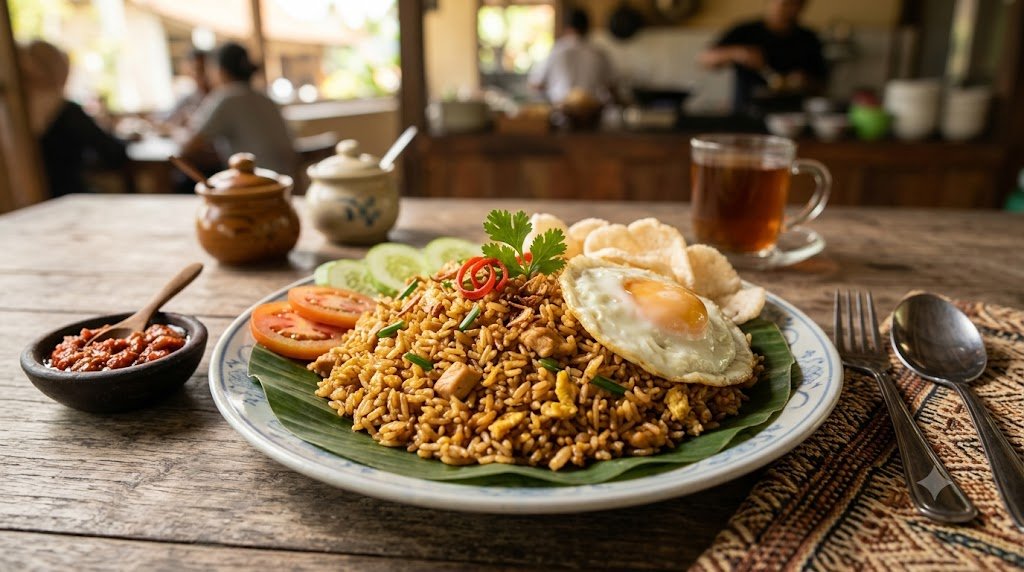
Walk down any bustling avenue in Jakarta or a serene village street in Bali at twilight, and you will inevitably hear a rhythmic sound: a metal spatula clinking against a roaring cast-iron wok. That hypnotic beat is the soundtrack to making nasi goreng, Indonesia’s undisputed national comfort dish.
More than a simple bowl of fried rice, this fragrant culinary masterpiece transcends social boundaries, economic status, and regional borders across the archipelago. From late-night street carts to white-tablecloth restaurants, nasi goreng holds a special place in the hearts and bellies of millions.
1. The Genius of Resourcefulness: Born from Zero Waste
The story of nasi goreng begins with a fundamental kitchen rule observed in households throughout Indonesia: never throw away cooked rice. In tropical climates without ancient refrigeration, leftover rice from dinner would spoil quickly if left unattended.
Indonesian home cooks transformed a necessity into culinary magic by flash-frying yesterday’s cold rice in a blazing wok with aromatic spices. Cold, dry rice grains hold less moisture, allowing them to absorb rich flavors without turning into a mushy porridge.
2. The Secret Sauce: Kecap Manis and Aromatic Spice Paste
What separates Indonesian fried rice from its global counterparts in China, Thailand, or South America is its unmistakable, rich depth of flavor. The primary secret weapon is kecap manis, a thick, syrupy dark sweet soy sauce infused with palm sugar.
Before the rice even touches the pan, cooks fry a ground spice paste known as bumbu—a fragrant mix of shallots, garlic, chili peppers, and shrimp paste (terasi). This aromatic foundation coats every single grain with a smoky, savory, sweet, and spicy melody.
3. The Ultimate Culinary Canvas: Infinite Regional Variations
One key reason nasi goreng achieved legendary status across more than 17,000 islands is its unmatched versatility and adaptiveness. Every province adds its own distinct local personality, reflecting regional agriculture and preferred protein sources.
In Sumatra, nasi goreng rempah bursts with fiery spices and beef cuts, while Java embraces a sweeter profile topped with shredded chicken. Seafood lovers flock to coastal towns for squid-ink-tinted varieties or rice tossed with salty dried fish (ikan asin).
4. Uniting Street Carts and High Society
Food often divides society into price brackets, but nasi goreng acts as Indonesia’s great social equalizer. You can buy a piping hot paper wrap from a pedagang kaki lima (street vendor cart) for a few thousand rupiah or order a gourmet rendition topped with wagyu beef at a five-star hotel.
Politicians, corporate executives, backpackers, and college students all queue at the same street corners when late-night cravings hit. It is an accessible luxury that delivers consistent comfort regardless of how much money you carry in your wallet.
5. Global Ambassador: Winning Hearts Worldwide
The fame of nasi goreng long ago breached national boundaries to earn global recognition alongside dishes like rendang and satay. World leaders, visiting pop stars, and international celebrity chefs frequently sing its praises during visits to Southeast Asia.
International food surveys consistently rank nasi goreng among the world’s most delicious foods. Its balanced flavor profile acts as an inviting gateway for international travelers exploring the complex world of Indonesian spices for the very first time.
6. More Than Food: A Taste of Cultural Hospitality
In Indonesian culture, offering food is the highest expression of warmth, community, and hospitality. Servings of nasi goreng are almost always completed with classic side accompaniments: a sunny-side-up egg (telur ceplok), crispy shrimp crackers (kerupuk), and pickled cucumbers (acar).
This complete ensemble turns a humble meal into a festive celebration of textures and temperatures. Eating a plate of nasi goreng is not just about fuel; it is about connecting with centuries of shared heritage and home-cooked warmth.
Why the Wok Flame Will Never Die
Nasi goreng stands as Indonesia’s ultimate culinary icon because it tells a story of resourcefulness, flavor harmony, and cultural pride. It bridges generational gaps while welcoming foreigners with open arms and a sizzling pan.
As long as street vendors push their wooden carts into the night and home cooks look to turn last night’s dinner into tomorrow’s feast, nasi goreng will reign supreme as the heart and soul of Indonesian cuisine.
Frequently Asked Questions (FAQ)
What makes Indonesian Nasi Goreng different from Chinese or Thai fried rice?
Indonesian nasi goreng uses kecap manis (sweet soy sauce) and terasi (shrimp paste) in its base spice paste, giving it a darker color and a unique sweet, savory, and smoky taste compared to lighter Chinese or Thai styles.
Is Nasi Goreng typically spicy?
It can be tailored to individual tastes! Street cooks will ask how many chilies you prefer. While traditional versions carry a subtle warm kick from fresh chilies, you can easily order it completely mild (tidak pedas).
What are the traditional side dishes served with Nasi Goreng?
A classic plate comes garnished with a sunny-side-up fried egg, crispy kerupuk (shrimp or garlic crackers), fresh cucumber and tomato slices, and acar (sweet and sour pickled vegetables).
Can vegetarians or vegans eat Nasi Goreng?
Yes! You can ask the cook to omit shrimp paste (terasi), fish sauce, eggs, and meat. Many places offer delicious vegetarian versions featuring tofu (tahu), tempeh, and fresh garden vegetables.