








When summer temperatures skyrocket, forests across the globe transform into massive tinderboxes waiting for a single spark. Wildfires have traditionally been fought with brute force, armies of brave firefighters, and millions of gallons of water dumped from above. Yet as climate patterns shift and blazes grow more intense, the old playbooks are no longer enough to keep up with the flames.
To protect vulnerable ecosystems and communities, nations around the world are rethinking their entire approach to disaster management. From high-tech artificial intelligence networks high in the canopy to four-legged lawnmowers roaming dry hillsides, global responses are becoming astonishingly creative. This global evolution is proving that saving our forests requires a mix of cutting-edge innovation and time-tested wisdom.
Spain and the Four-Legged Firefighters
In the parched, sun-drenched landscapes of Southern Europe, Spain has turned to a distinctly low-tech solution to prevent catastrophic blazes. Local municipalities are actively hiring herds of hungry goats and sheep to clear out dangerous underbrush before the dry season hits peak intensity. This eco-friendly strategy, often called “prescribed grazing,” targets the exact fuel that feeds rampant forest fires.
These nimble animals comfortably navigate steep terrain where heavy machinery simply cannot operate without causing severe soil erosion. As they happily munch through flammable shrubs and dry grass, they naturally construct wide, effective firebreaks across countryside hills. Spain’s clever approach not only reduces wildfire risks significantly but also supports local pastoral farming communities and keeps ecosystems balanced naturally.
The High-Flying Giants of North America
Across the Atlantic Ocean, North America takes an entirely different scale of action when massive blazes threaten vast wilderness areas. Canada and the United States rely heavily on an impressive aerial fleet, featuring amphibious aircraft like the legendary Canadair “Super Scooper.” These specialized flying titans can land directly on lakes, scoop thousands of gallons of water in seconds, and return to the fire line instantly.
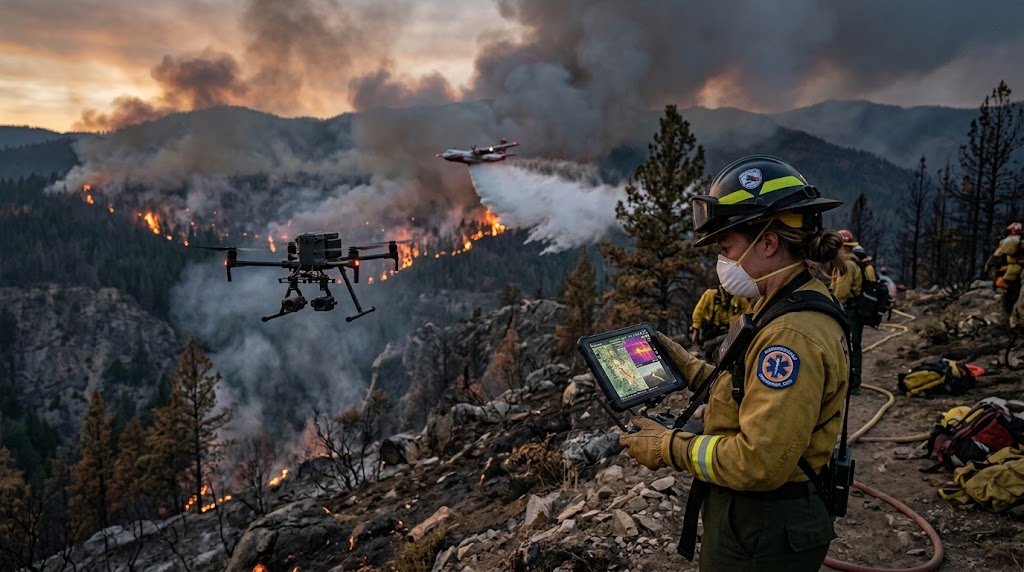
Complementing these agile water-scoopers are massive converted passenger jets, such as DC-10s and Boeing 747s, transformed into heavy airtankers. Flying low over smoky mountain ridges, they drop continuous ribbons of bright red fire retardant to halt fast-moving fire fronts. This impressive aerial power provides crucial ground cover, giving hotshot crews on the terrain the vital time they need to dig containment lines.
Australia Reclaims Indigenous Fire Knowledge
Australia experiences some of the most dramatic and dangerous bushfire seasons anywhere on the planet. In recent years, environmental authorities have increasingly turned to the continent’s First Nations peoples for guidance on land management. Indigenous Australians have practiced “cultural burning” for tens of thousands of years, utilizing low-intensity, highly controlled cool fires during cooler months.
Unlike terrifying summer infernos, these gentle winter fires burn away accumulated dead leaf litter while leaving mature tree canopies untouched. The deliberate process encourages native plant regeneration, protects local wildlife habitats, and eliminates fuel loads before scorching heat arrives. By blending ancient traditional knowledge with modern emergency planning, Australia is building a much more resilient, fire-adapted landscape for the future.
Japan and Scandinavia Leverage AI Early-Detection
When it comes to stopping a destructive forest fire, every single minute counts during the initial breakout phase. In countries like Japan and Sweden, tech developers are placing their faith in artificial intelligence, advanced thermal imaging, and smart sensors. Ultra-sensitive camera networks mounted on mountain towers scan vast tree lines constantly, picking up subtle smoke plumes long before human lookouts can spot them.
Additionally, autonomous monitoring drones equipped with heat sensors patrol dense, isolated forestry zones daily to catch hidden hotspots early. When thermal anomalies are detected, the system automatically alerts emergency dispatchers with precise GPS coordinates for rapid intervention. Catching a small ember before it transforms into an out-of-control blaze saves millions in damages and protects fragile forest habitats.
Greece Combats Flames with Smart Infrastructure
Greece has faced devastating summer blazes along its historic Mediterranean coastlines in recent years, prompting rapid structural overhauls. Beyond traditional firefighting teams, the nation is investing heavily in smart fire-resistant infrastructure near high-risk residential zones. Engineers are installing widespread automated sprinkler networks fed by large, dedicated seawater reservoirs along vulnerable suburban boundaries.
Furthermore, community urban planners are introducing strict landscaping rules that enforce fire-smart green buffers around pine forests. Homes are increasingly built using non-combustible materials, while local authorities enforce regular clearance of dry vegetation along public roads. Greece’s multi-layered strategy demonstrates how modern civil engineering can safeguard vulnerable populations when nature unleashes its fiercest heatwaves.
A Unified Global Front Against Fire
No single country holds the perfect, universal answer to the growing global threat of catastrophic wildfires. However, by sharing innovative ideas, combining advanced technologies, and listening to traditional land stewards, humanity is building a stronger collective defense. The future of firefighting is no longer just about reacting to emergencies, but adapting intelligently through proactive prevention.
Whether through high-tech satellite monitoring systems or simple herds of grazing goats on a quiet hillside, creative solutions are emerging everywhere. As extreme weather events challenge communities worldwide, these diverse global approaches offer hope for our shared environment. Through international cooperation and constant innovation, protecting our planet’s irreplaceable forests remains a challenge we can overcome together.