









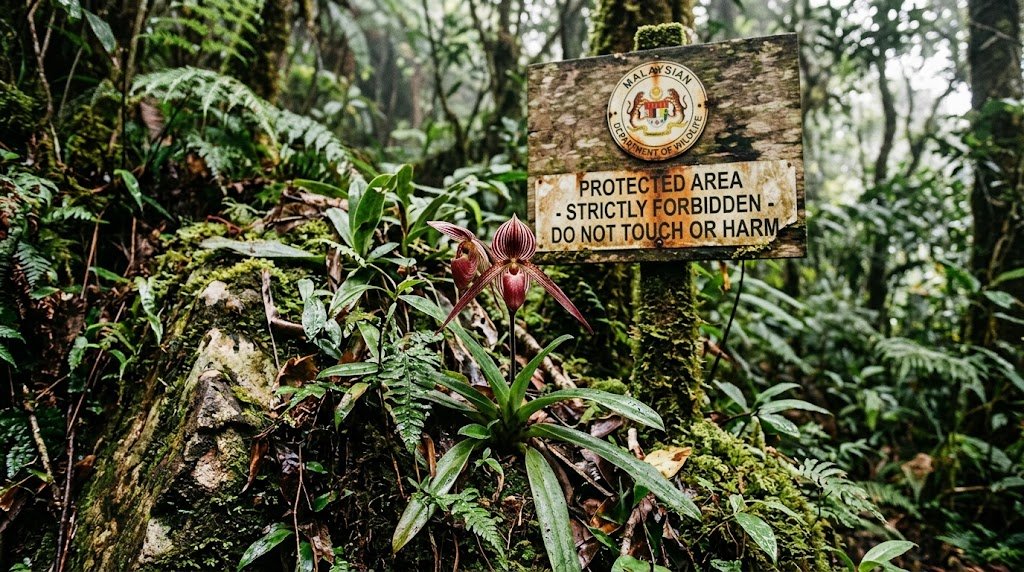
Walk into any plant enthusiast’s home, and you will likely find a jungle of monstera leaves, trailing pothos, and neatly arranged succulents. Indoor gardening has exploded into a global passion, with people constantly searching for the next unique green companion to adorn their living spaces. However, beyond the commercial nurseries and familiar houseplants lies a strictly off-limits realm of the botanical kingdom.
Some species are so rare, ecologically vital, or historically targeted by poachers that harming or possessing them can land you in serious legal trouble. Governments and international bodies have placed these photosynthetic wonders under heavy legal protection. From fines that could drain a bank account to potential prison time, the law takes botanical conservation surprisingly seriously.
+------------------------+--------------------------+-----------------------------------+
| Plant Species          | Primary Habitat          | Key Legal Protection Status       |
+------------------------+--------------------------+-----------------------------------+
| Western Underground    | Western Australia        | Threatened Species Protection Act |
| Orchid                 |                          |                                   |
| Attenborough’s Pitcher | Mount Victoria,          | CITES Appendix I Listed           |
| Plant                  | Philippines              |                                   |
| Saguaro Cactus         | Sonoran Desert, USA      | Arizona Native Plant Law          |
| Corpse Flower          | Rainforests of Indonesia | Indonesian Conservation Act       |
| Black Bat Flower       | Southeast Asia           | Regional Biodiversity Protection  |
+------------------------+--------------------------+-----------------------------------+
Take the Western Underground Orchid (Rhizanthella gardneri), a botanical anomaly native to Western Australia. Unlike almost every other plant on Earth, this bizarre organism completes its entire life cycle underneath the soil, never seeing a single direct ray of sunlight. It lacks chlorophyll entirely, drawing nutrients instead through a symbiotic relationship with specific fungi tied to broombush roots.
Because it lives buried underground, finding one in the wild is nearly impossible for the average hiker. However, digging one up or disturbing its habitat carries severe penalties under Australian conservation laws. With fewer than fifty known individuals surviving in the wild, removing a single specimen could push the entire species directly into total extinction.
Moving to the mist-shrouded peaks of Mount Victoria in the Philippines, we find Nepenthes attenboroughii, commonly known as Attenborough’s pitcher plant. Discovered relatively recently, this carnivorous giant produces pitcher-shaped traps large enough to capture and digest small rodents, insects, and lizards. Its alien appearance immediately made it a high-value target for illegal plant collectors worldwide.
Due to rampant poaching risks, local forestry authorities tightly monitor access to its high-altitude habitat. Transporting or culturing wild-collected specimens violates national wildlife protection acts and international treaties like CITES. Authorities actively patrol the area, ensuring these carnivorous behemoths remain untouched in their natural mountain stronghold.
In North America, the majestic Saguaro Cactus (Carnegiea gigantea) stands as an iconic symbol of the Sonoran Desert. Growing extraordinarily slowly, a saguaro can take up to seventy-five years just to sprout its very first side arm. These towering desert giants provide essential shelter, water, and nourishment for dozens of desert animal species.
Because of their immense popularity in high-end landscaping, illegal harvesters frequently try to dig up wild saguaros to sell on the black market. In Arizona, cutting down, digging up, or damaging a wild saguaro without an official permit is a felony crime. Microchips are routinely inserted into wild cacti so law enforcement can track and verify stolen plants.
Cross the Pacific into the dense tropical rainforests of Indonesia, and you will encounter Rafflesia arnoldii, famously known as the Corpse Flower. Producing the largest individual flower on the planet, this parasitic organism lacks leaves, stems, and true roots. Instead, it bursts through host vines once every few years, emitting the distinct aroma of rotting meat to attract pollinating carrion flies.
Indonesian national law strictly guards Rafflesia arnoldii under heavy environmental conservation legislation. Attempting to harvest, sell, or destroy this ecological treasure carries steep criminal charges and long jail sentences. Because the flower relies on a delicate parasitic bond with specific jungle vines, it simply cannot survive in a pot on your windowsill.
Further north in Southeast Asia grows the haunting Black Bat Flower (Tacca chantrieri). Featuring dark purple-black petals that resemble a bat in mid-flight and long whiskery filaments, it looks like something straight out of a gothic fantasy novel. While cultivated hybrids exist in specialized nurseries, taking wild specimens from protected nature reserves is strictly illegal across multiple countries.
* Destroying protected wild flora disrupts local ecosystems and accelerates biodiversity loss.
* International treaties like CITES track illegal cross-border trade of endangered botanical species.
* Penalties for plant poaching often match the severity of illegal animal trafficking charges.
* Microchipping and satellite tracking are now standard tools used to protect rare wild cacti.
The global urge to collect rare plants often stems from curiosity and appreciation, but nature requires clear boundaries. Ecosystems depend on these specialized species to maintain environmental stability and support local wildlife. Removing even one specimen from the wild disrupts delicate natural balances built over millions of years of evolution.
Modern conservation law treats plant poaching with the same seriousness once reserved exclusively for illegal animal trafficking. Specialized wildlife task forces now monitor online plant forums, inspect international cargo, and patrol remote forests. If you ever encounter one of these botanical marvels during your outdoor adventures, admire it from a safe distance, take a photo, and leave the spade at home.