





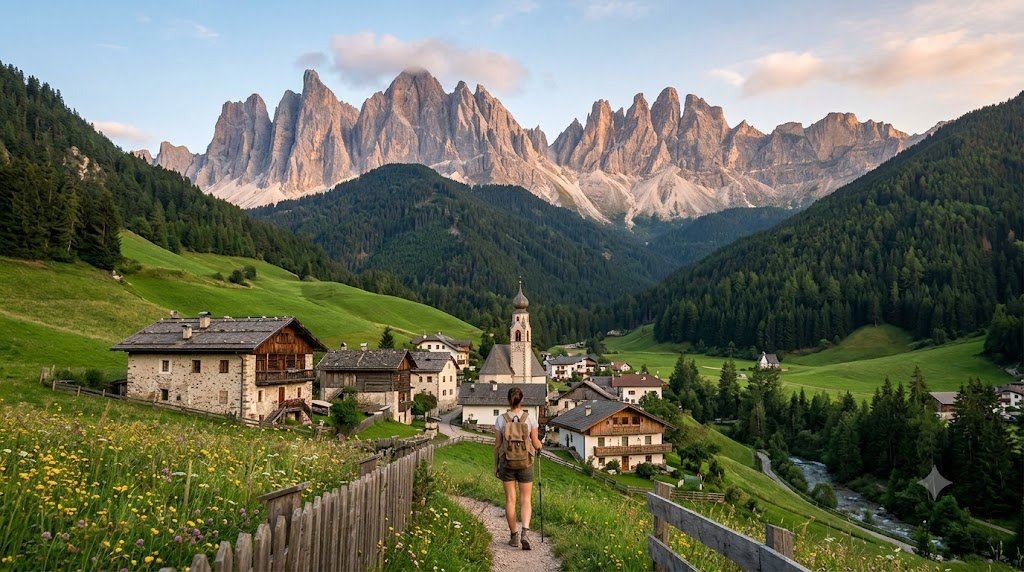
I still remember standing on a dew-kissed balcony in San Cassiano just as the morning sun hit the jagged limestone peaks of the Italian Dolomites. The distant chime of cowbells echo across the valley, carried on crisp, pine-scented mountain air that immediately cuts through months of city fatigue.
There were no screeching subway brakes, no flashing digital billboards, and no urgent push notifications demanding my immediate attention. In that quiet moment, taking a deep breath felt less like a basic bodily function and more like an act of pure, luxurious restoration.
In our relentless, hyper-connected digital age, urban burnout has transformed from an occasional nuisance into a global pandemic. Millions of exhausted professionals are actively seeking an antidote to the endless concrete jungle, leading to a massive resurgence in alpine wellness tourism.
Tucked away in northern Italy, the fairytale villages of the Dolomites offer far more than just postcard-perfect views; they provide a slow, rhythmic way of life that recalibrates the soul. This ready-to-publish news feature explores how these picturesque mountain sanctuaries have become the premier global retreat for weary city dwellers.
The Alpine Resurgence: A Shift Toward Slow Living
For decades, European holidaymakers focused heavily on crowded coastal hotspots like the Amalfi Coast or the Riviera. However, recent hospitality shifts reveal a dramatic pivot toward high-altitude tranquility.
Modern travelers are trading crowded beach umbrellas and scorching summer heatwaves for cool mountain breezes, wildflower-filled meadows, and unhurried afternoons in centuries-old Ladin villages.
A compelling regional case study conducted across South Tyrol highlighted this exact transformation. Local tourism boards reported a 40% increase in extended summer stays from international remote workers and urban executives over the past two years.
Rather than booking rapid weekend trips, visitors are checking into family-owned alpine lodges for weeks at a time, blending remote work with therapeutic high-altitude hiking, forest bathing, and farm-to-table gastronomy.
The Cold Hard Data: Why Cities Are Losing the Loyalty Race
If you think the mass migration to mountain villages is just a passing social media trend, the latest global travel statistics prove that the desire for natural serenity is reshaping global tourism:
| Trend Metric | Industry Statistic | Primary Strategic Opportunity |
| Search Interest | +115% increase in searches for “quiet alpine retreats” | Focus vacation marketing on mental wellness and nature immersion. |
| Local Retention | 82% of mountain travelers prefer staying in eco-certified chalets | Book directly with family-run, sustainable alpine guesthouses. |
| Length of Stay | Average alpine stay duration increased from 3.5 to 7.2 days | Embrace slow travel dynamics over rushed multi-city itineraries. |
Cultivating the Alpine Mindset: The Unique Ladin Perspective
What truly sets the villages of the Dolomites apart from standard mountain resorts is their unique, deep-rooted cultural heritage. Tucked away in valleys like Val Badia and Val Gardena, the local population speaks Ladin—a rare, ancient Rhaeto-Romance language preserved for centuries behind formidable rocky walls.
Life in villages like Ortisei and Corvara moves to an entirely different drumbeat. The locals treat hospitality not as a transaction, but as a warm, sacred tradition passed down through generations.
Sitting down in a cozy timber stube to enjoy a warm bowl of canederli (traditional bread dumplings) cooked by a family matriarch offers a profound sense of human connection that sterile, large-scale luxury hotels simply cannot replicate.
Exploring the Peaks: A Masterclass in Natural Restoration
Living in a bustling metropolis conditions our brains to remain in a constant state of low-grade fight-or-flight alert. In contrast, the unique geology of the Dolomites—a UNESCO World Heritage site—exerts a proven calming effect on the nervous system. The dramatic phenomenon known as Enrosadira, where the pale limestone peaks flush with brilliant pink, orange, and purple hues at sunset, draws visitors out into the open air every evening in quiet awe.
Whether you spend your days tackling gentle panoramic trails above Alpe di Siusi—Europe’s largest high-altitude Alpine meadow—or simply sipping a glass of crisp local Lagrein wine while watching the shadows lengthen across the valley, the mountains force you to slow down. You begin to notice the scent of wild thyme underfoot, the golden light filtering through larch forests, and the satisfying feeling of genuine physical tiredness after a long walk outdoors.
Navigating the Future of Mountain Travel
As world news continues to highlight the pressures of modern urban life, the remote villages of the Dolomites stand as a timeless sanctuary for those seeking balance. Protecting this fragile ecosystem requires visitors to embrace mindful, respectful travel habits.
By visiting during the shoulder seasons—such as late spring or early autumn—travelers can enjoy quiet trails, lower accommodation rates, and authentic interactions with locals without overwhelming the local infrastructure. The road away from urban chaos is paved with pine needles and mountain limestone, and it is waiting for anyone ready to step off the fast track.
Frequently Asked Questions
Which Dolomites village is best for first-time visitors seeking a quiet escape?
Ortisei in Val Gardena and San Cassiano in Val Badia are fantastic starting points. Both offer pedestrian-friendly village centers, world-class local dining, direct cable-car access to high-altitude hiking trails, and a wonderful blend of Italian and South Tyrolean charm.
Is it necessary to rent a car to explore the Dolomites villages?
While a car offers ultimate flexibility, South Tyrol boasts an exceptionally efficient public transportation system. Most regional hotels provide guests with free public transit passes that cover buses and regional trains, making car-free alpine travel remarkably easy.
When is the best time of year to visit for a peaceful retreat?
The shoulder seasons—specifically June, late September, and October—offer the ideal balance of pleasant weather, open cable cars, beautiful autumn foliage or blooming wildflowers, and significantly smaller crowds compared to peak July and August.