




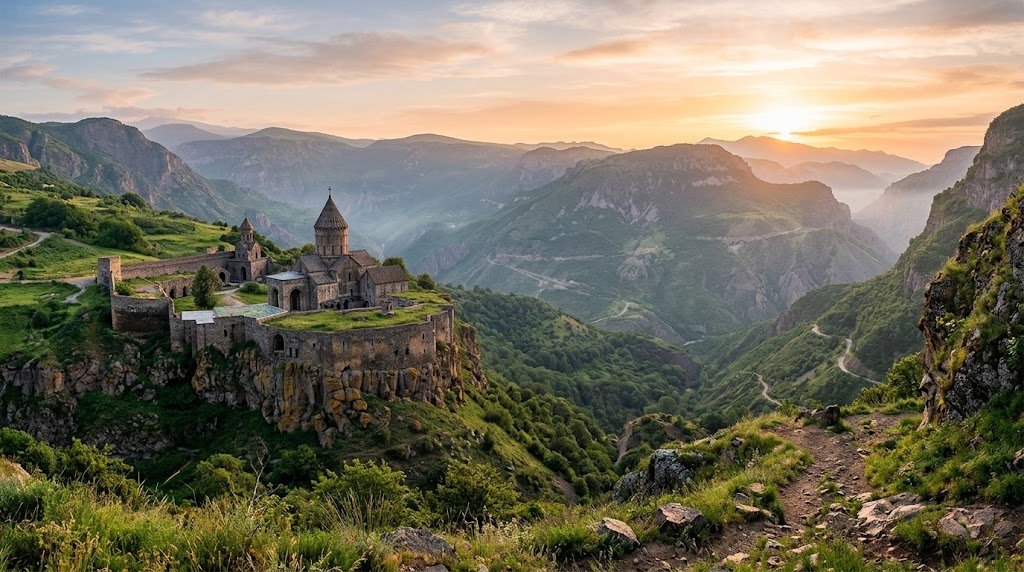
High in the South Caucasus, where jagged peaks scrape the sky and deep gorges slice through ancient stone, lies a secret frozen in time. Armenia was the world’s very first nation to adopt Christianity as its state religion back in 301 AD.
Instead of building all their sacred sanctuaries in bustling city centers, early Armenian monks had a different idea. They ventured deep into untamed wilderness, perching stone complexes on impossible cliff edges and carving sanctuaries directly into mountain rock.
Today, these remote monasteries remain some of the world’s most breathtaking engineering marvels. They offer a unique blend of spiritual tranquility, dramatic mountain landscapes, and sheer historical grit.
1. Tatev Monastery: The Fortress in the Sky
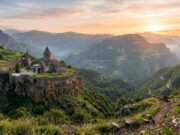
Perched precariously on the edge of a massive basalt plateau overlooking the Vorotan Gorge sits Tatev Monastery. Founded in the ninth century, this architectural masterpiece served not only as a spiritual sanctuary, but also as a powerful fortress and a center of higher learning.
Reaching Tatev used to require a grueling hike down and up a treacherous ravine. Today, visitors take the Wings of Tatev, the world’s longest non-stop double-track cable car. Gliding silently above the gorge provides a bird’s-eye view of the dramatic natural canyon.
Once inside the monastery walls, history comes alive in every stone block. The main church of Saints Peter and Paul features intricate carvings and a famous medieval dynamic column engineered to alert monks of incoming earthquakes.
2. Geghard: The Sanctuary Carved from Living Rock
Located at the entrance of the lush Azat River Valley, Geghard Monastery defies ordinary architectural logic. While parts of the complex are freestanding, large portions of the sanctuary are carved directly out of the adjacent mountain cliff.
Founded in the fourth century, the site was originally called Ayrivank, meaning “the Monastery of the Cave.” It was later renamed Geghard, which translates to “the Monastery of the Spear,” referencing the holy spear that allegedly wounded Jesus on the cross.
Walking through the dark, cavernous chambers carved into solid rock feels intensely mystic. The acoustics inside the upper rock-cut church are so perfect that even a quiet whisper echoes like a solemn choral chant throughout the stone hall.
3. Haghpat and Sanahin: The Northern Twin Legends
Tucked away in the dense green mountains of the northern Lori region, Haghpat and Sanahin Monasteries stand as twin testaments to medieval Armenian art. Built during the Kiurikian dynasty between the 10th and 13th centuries, both sites are designated UNESCO World Heritage landmarks.
Sanahin, whose name translates to “this one is older than that one,” boasts a sprawling library, vaulted university rooms, and heavy stone arches built to withstand harsh mountain winters. It carries a heavy, noble sense of intellectual history.
Just across the canyon, Haghpat Monastery looks out over the Debed River. Its striking multi-tiered bell tower and beautiful stone crosses, known locally as khachkars, blend seamlessly into the surrounding emerald pastures.
4. Noravank: Red Cliffs and Delicate Arches
If you travel south through a narrow gorge lined with towering brick-red limestone cliffs, you will suddenly encounter the stunning sight of Noravank Monastery. Built in the 13th century, its warm stone facades echo the exact color palette of the canyon walls.
Noravank is world-famous for the Surb Astvatsatsin (Holy Mother of God) church. This unique two-story building features a narrow cantilevered staircase built right into the outside wall, requiring visitors to carefully ascend without a handrail.
The intricate stone reliefs above the doorways, crafted by the legendary medieval sculptor Momik, are among the finest examples of Armenian art. Visiting at sunset, when the surrounding cliffs glow fiery red, is an unforgettable experience.
Why These Wilderness Sanctuaries Still Matter
Armenia’s remote monasteries were deliberate masterclasses in survival. Over centuries of foreign invasions, earthquakes, and harsh mountain winters, these isolated outposts preserved Armenia’s written language, artistic traditions, and spiritual identity.
The monks specifically chose locations that were defensible, peaceful, and close to nature. Looking out from the ramparts of any of these sanctuaries, it becomes obvious that the surrounding nature was meant to be an integral part of the spiritual experience.
Visiting them today feels less like standard sightseeing and more like entering an epic fantasy novel. There are no neon lights or commercial mega-resorts here—just raw stone, sweeping mountain vistas, and centuries of quiet reflection.
Planning Your Mountain Expedition
Traveling to Armenia’s distant valleys is far easier now than it was in medieval times, but it still retains a touch of genuine adventure. Road trips across the country offer scenic drives through changing terrain, from lush forests to dry alpine plains.
Spring and autumn are the absolute best times to visit. Spring brings wild green landscapes dotted with blooming wildflowers, while autumn paints the mountain canyons in rich shades of amber, bronze, and crimson.
Be sure to pack sturdy footwear, as exploring rock-cut chambers and uneven cobblestone paths requires good traction. Bring a jacket even in summer, as high mountain winds can turn quite chilly without warning.
Final Thoughts on Armenia’s Hidden Gems
Armenia’s mountain monasteries represent an extraordinary intersection of human resilience, brilliant architecture, and untouched natural beauty. They stand proud on cliff edges, carrying the quiet stories of ancient centuries into the modern world.
Whether you are walking through the carved stone halls of Geghard or riding the cable car high above Tatev, these remote sites offer a rare sense of wonder. For travelers seeking meaningful adventure, Armenia’s highlands are calling.