









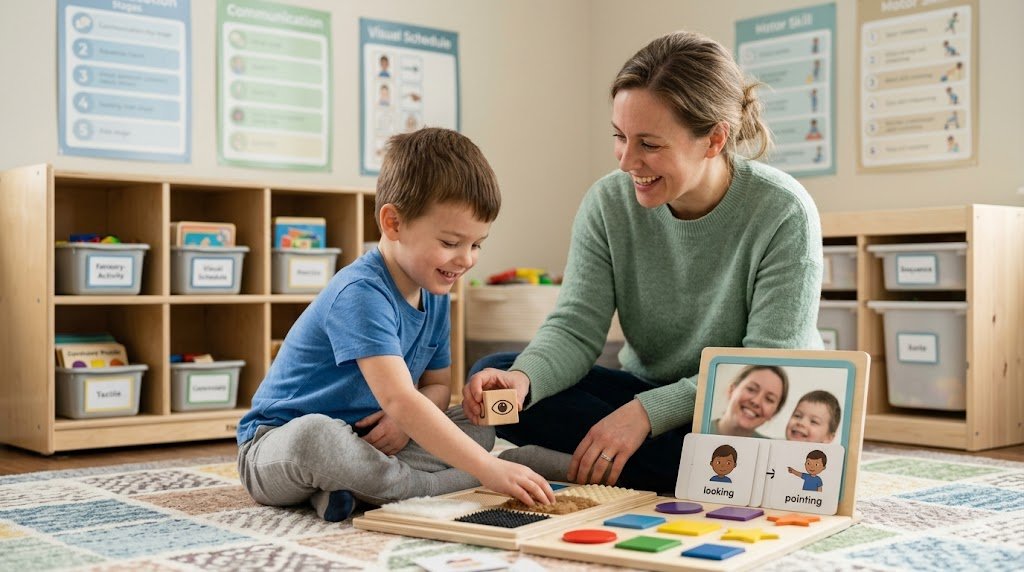
When a child receives an autism diagnosis, parents often feel as if they have been handed a map written in a language they have yet to learn. The urge to dive headfirst into flashcards, academic drills, and complex speech schedules can be almost overwhelming.
Yet, early childhood experts and pediatric specialists are offering a refreshing, comforting shift in perspective. Before worrying about writing names or memorizing numbers, parents are encouraged to pause, take a deep breath, and prioritize the foundational pillars of human connection and sensory regulation.
Unlocking effective early learning in children with autism isn’t about rushing toward traditional milestones on a standard timeline. Instead, it is about building a customized, joy-filled bridge between your child’s unique processing world and the environment around them.
1. Prioritize Communication Over Perfect Speech
The first major hurdle for many families is the myth that communication only counts if it comes in spoken words. In reality, functional communication encompasses gestures, eye contact, pointing, picture exchange systems, and assistive technology tools.
When parents focus on giving their child a reliable way to express basic needs and emotions, frustration drops dramatically. Celebrating a simple tug on your sleeve or a point toward a juice cup establishes the core belief that interacting with others is empowering.
By prioritizing functional expression first, you create a calm foundation where verbal language can naturally emerge at the child’s own comfortable pace without high-pressure anxiety.
2. Master the Power of Shared Attention and Engagement
Before a child can absorb a structured lesson, they must first feel connected to the person teaching them. Joint attention—the shared focus of two individuals on an object or event—is the true engine of all early learning.
Rather than forcing a child to join your activity, step into theirs. If your youngster loves lining up colorful toy cars or watching spinning wheels, sit alongside them and imitate their actions with warm, gentle enthusiasm.
This simple act of joining their world transforms solitary play into a shared social experience. Once a child realizes you are an inviting partner in their favorite interests, their willingness to engage and learn from you expands tenfold.
3. Establish Sensory Comfort and Emotional Safety
It is impossible to build complex learning skills when a child’s sensory system is in a state of overdrive or distress. Autistic children often process sights, sounds, textures, and movements far more intensely than neurotypical peers.
Creating a predictable, sensorially balanced home environment should always take precedence over formal instruction. Take time to observe whether loud noises, harsh overhead lighting, or scratchy clothing tags cause subtle signs of stress or meltdown.
Integrating soothing sensory breaks, weighted blankets, soft lighting, or dedicated quiet corners helps regulate their nervous system. A child whose sensory needs are met is a child whose mind is open, relaxed, and ready to explore.
4. Harness Passionate Special Interests as Learning Engines
One of the most joyful gifts of autism is the capacity for intense, deep fascination with specific topics, whether it is train schedules, outer space, ocean creatures, or vacuum cleaners.
Far from being distractions, these special interests are pure educational goldmines. Smart early learning strategies incorporate these passions directly into daily play and foundational skill development.
Counting toy trains, reading books about galaxies, or drawing ocean animals converts routine instruction into an exciting adventure. When passion leads the lesson plan, learning feels effortless and naturally rewarding for both parent and child.
5. Embrace Consistency and Visual Routines
Navigating an unpredictable world can generate significant anxiety for young autistic minds. Establishing clear, visual daily routines offers an immediate sense of structure and safety that reduces daily friction.
Simple picture schedules illustrating morning tasks, mealtime, play sessions, and bedtime help children anticipate transitions without sudden distress. Predictability fosters confidence and emotional independence across all home activities.
When children know exactly what comes next, their mental energy frees up, allowing them to engage far more deeply in constructive play and functional early learning.
6. Celebrate Micro-Progress and Honor Unique Timelines
In a world obsessed with standardized developmental charts, it is vital to remember that progress for an autistic child is rarely linear. A breakthrough might be a sudden eye contact share, a newly tolerated texture, or a joyful turn-taking moment.
Celebrating these quiet victories nurtures a positive, resilient mindset for the entire household. Remember that early learning is a marathon filled with scenic detours, not a sprint toward a rigid finish line.
By focusing on communication, engagement, sensory balance, and joy, parents create a nurturing ecosystem where children with autism don’t just learn—they truly thrive on their own unique terms.