







High in the rugged, sun-drenched highlands of East Africa, an architectural miracle carved straight into red volcanic rock continues to defy time, gravity, and modern logic. While most ancient monuments across the globe have gradually transitioned into quiet museum relics, Ethiopia’s sacred rock-hewn churches remain gloriously, noisily, and soulfully alive. Every single morning, long before the sun paints the horizon in shades of crimson and gold, these centuries-old subterranean sanctuaries hum with the timeless rhythms of living faith.
Located in the historic town of Lalibela, about 600 kilometers north of the capital city Addis Ababa, these eleven extraordinary monolithic structures stand as a monument to human ambition. Commissioned in the 12th and 13th centuries by King Lalibela of the Zagwe dynasty, the complexes were conceived as a “New Jerusalem” for African Christians who could not undertake the dangerous journey to the Holy Land. Instead of building upwards with bricks and mortar, ancient stonemasons carved downwards into solid earth, chiseling out fully functional churches complete with doors, windows, altars, and intricate drainage systems.
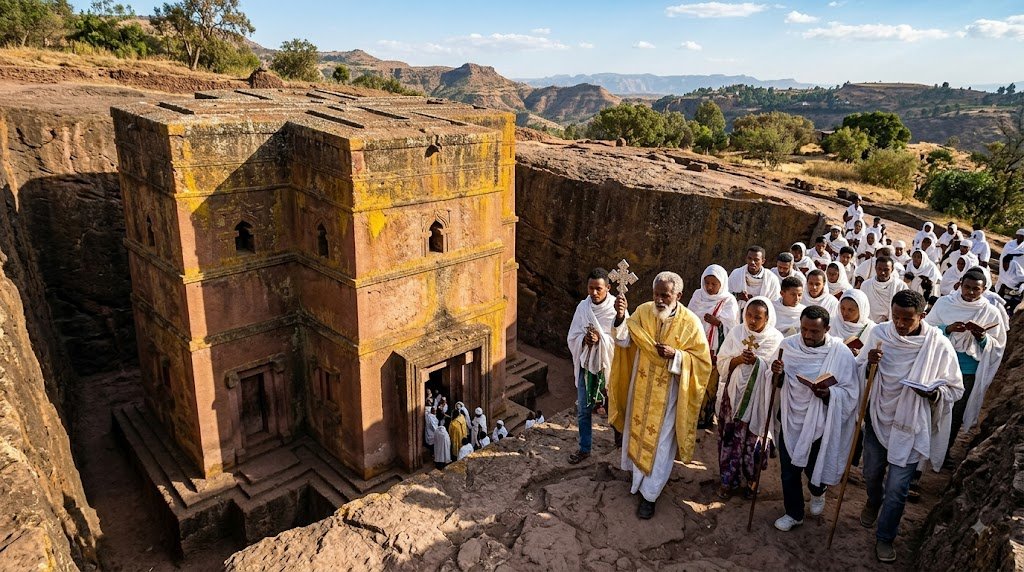
What greets modern visitors today is not a series of dusty exhibits behind velvet ropes, but an immersive experience into medieval traditions that have survived unbroken. White-robed pilgrims, often wrapped in traditional cotton shawls called gabi, weave through narrow stone trenches and underground tunnels carved directly into the mountain. The deep, rhythmic sound of Ge’ez chants—spoken in an ancient liturgical language—reverberates off the cool stone walls alongside the hypnotic scent of burning frankincense. It is a living, breathing spiritual world that feels remarkably untouched by the frantic pace of the twenty-first century.
Among the eleven rock-hewn masterpieces, Biete Giyorgis (the Church of Saint George) stands out as the ultimate icon of the entire complex. Standing isolated from the main clusters in a 12-meter-deep pit, the church is carved into the shape of a perfect Greek cross when viewed from above. Standing at the lip of the trench and looking down at its pristine, weathered roof is enough to leave even the most seasoned global travelers completely speechless. It is little wonder that visitors routinely nickname the entire site the “Eighth Wonder of the World”.
Yet, what truly sets Lalibela apart from other famous historical sites like the Pyramids of Giza or the Roman Colosseum is its double identity. Here, high-tech camera-toting international tourists share narrow stone pathways with barefoot local worshippers who have walked for weeks to pray at these sacred altars. Priests in colorful, embroidered ceremonial robes hold ancient brass crosses for blessings while guiding curious travelers through hidden courtyards. This unique overlap creates an energetic atmosphere where living devotion and global curiosity exist side by side.
Tourism in Lalibela has seen a remarkable resurgence as global travelers increasingly seek authentic, off-the-beaten-path cultural experiences. International airlines and regional tour operators report rising interest from adventurous travelers eager to trade cookie-cutter beach resorts for soul-stirring heritage sites. During major Orthodox religious holidays such as Genna (Ethiopian Christmas in January) and Timkat (Epiphany), the town transforms into a sea of white-robed devotion. Tens of thousands of pilgrims gather for overnight candlelit vigils, creating an awe-inspiring spectacle that captivates culture enthusiasts worldwide.
Naturally, managing a thousand-year-old active holy site that draws thousands of international sightseers comes with its fair share of delicate challenges. Preserving the soft, porous volcanic tuff rock from natural erosion, heavy rainwater, and human foot traffic requires constant vigilance and world-class engineering. Organizations like UNESCO and the World Monuments Fund have collaborated with Ethiopian heritage authorities to implement innovative conservation projects. Protective canopy structures cover several vulnerable churches, shielding ancient facade details while teams work tirelessly to implement long-term restoration plans.
Local church authorities and community leaders work in close harmony to ensure that tourism enhances local livelihoods without disrupting sacred daily rituals. Special visitation hours and designated prayer pathways allow pilgrims to conduct their solemn rites in peace while opening doors for respectful cultural diplomacy. Local guides, many born and raised in the shadow of the rock walls, share personal family histories alongside deep historical knowledge. Their passionate storytelling bridges the gap between ancient stone engineering and the living heartbeat of the local community.
The economic impact on the surrounding region has also proven transformative, creating vibrant hospitality ecosystems around the ancient site. Atmospheric eco-lodges offering panoramic mountain views, cozy traditional coffee houses, and artisan markets selling handmade cross replicas have blossomed throughout Lalibela. Visitors spend their afternoons exploring subterranean secret tunnels and their evenings sipping freshly brewed Ethiopian coffee while enjoying traditional injera meals accompanied by acoustic masinko music. It is a holistic cultural immersion that leaves a lasting impression on everyone who makes the journey.
Beyond the famed monoliths of Lalibela, Ethiopia’s rock-hewn legacy stretches even further north into the dramatic, sky-scraping cliffs of the Tigray region. Here, dozens of lesser-known rock churches are carved directly into sheer cliff faces hundreds of feet above the valley floor. Reaching places like Abuna Yemata Guh requires climbing vertical sandstone walls using handholds and footholds worn smooth by centuries of brave worshipers. For thrill-seeking travelers who love combining extreme trekking with ancient history, these sky-high sanctuaries offer an adrenaline-pumping pilgrimage like no other on Earth.
Legend says King Lalibela was aided by a heavenly army of angels who worked through the night to complete the monolithic carving in record time. Whether one attributes the feat to divine intervention or extraordinary human ingenuity, standing before these carved stone titans remains a deeply humbling experience. The sheer audacity of hollowed-out mountains turned into sacred spaces proves that human creativity knows no bounds. In a world dominated by rapid technological change, Ethiopia’s rock churches remind us of the enduring power of faith and artistic devotion.
For modern globetrotters curating their ultimate bucket list, a journey to Ethiopia’s rock-hewn wonders delivers something far beyond standard sightseeing. It is a rare opportunity to witness living history where ancient stone, active devotion, and warm highland hospitality converge seamlessly. Long after the dust settles on the mountain trails, the echoing chants, glowing candles, and timeless grandeur of these rock sanctuaries linger in the heart. More than eight centuries after their creation, these living stone wonders continue to inspire, move, and welcome the world with open arms.